Ron Davis: Building Businesses -- and Leaders
Ron Davis never planned to spend his life as a chemical engineer.
He studied the discipline in college, following a path encouraged by his father, who pushed Davis and his siblings toward engineering careers. But even as he pursued the degree, Davis knew the field was less a destination than a starting point.
“I never really intended to do chemical engineering work,” he says. “It was just a great avenue to get into things I thought I’d be good at.”
What Davis believed he’d be good at was leadership.
As a student athlete who had spent much of his life in competitive environments, he gravitated toward roles where he could help organize teams, develop strategy, and move organizations forward. After graduating with a chemical engineering degree from Tulane and McNeese State, Davis began his career in chemical sales, quickly moving into management roles across industrial and environmental companies.
The work exposed him to large-scale businesses and complex markets, but more importantly, it taught him how companies grow.
At US Filter, a major water and wastewater company that later became part of Veolia Environment, Davis helped lead divisions responsible for large municipal and industrial operations. Over time, he became deeply involved in acquisitions and strategic integration—learning how to evaluate businesses, identify market opportunities, and build systems capable of scaling.
That experience would shape the rest of his career.
Seeing Opportunity Where Others Don't
Davis’ entrepreneurial turn came almost by accident.
A friend in Lake Charles, Louisiana, was struggling to operate a collision repair shop and asked for help. Davis stepped in to analyze the business and quickly realized something larger: the industry was fragmented and poorly organized. Most shops focused purely on repairs and paid little attention to customer experience.
He saw an opening.
“If your wife walked into most collision centers, she probably wouldn’t feel comfortable,” Davis recalls. “I thought we could build something different—great service, a clean and professional environment, and faster turnaround.”
In 2004 he launched Xpress Collision in Houston.
The model worked almost immediately.
Within months the first location was generating strong revenue, and Davis began expanding—opening new locations every eight to nine months. Within five years, Xpress Collision had grown to multiple locations across the Houston area and more than $20 million in sales.
But Davis wasn’t just building shops.
He was studying the industry.
From his time at US Filter, he understood how powerful consolidation could be when paired with the right strategy and leadership. Collision repair, he realized, was ripe for the same kind of roll-up.
Before he could execute that plan himself, private equity firm ONCAP approached him with an opportunity: merge Xpress Collision into Caliber Collision and help lead the company’s national expansion.
Davis saw the potential immediately.
“When you start with 50 stores instead of five,” he says, “you can scale a lot faster.”
Scaling to a National Platform
Davis joined Caliber Collision in 2009 as Chief Development Officer, later serving as Chief Strategy Officer.
At the time, the company operated 54 stores and generated about $180 million in revenue.
Over the next decade, Caliber became one of the most successful consolidation stories in the collision repair industry.
Through acquisitions, operational improvements, and strategic expansion into services like vehicle calibration and glass repair, the company grew to more than 1,800 locations in 44 states and over $8 billion in revenue.
For Davis, the key was never just scale—it was leadership.
When evaluating companies, he says the first question he asks isn’t about financials or market share.
It’s about people.
“Who’s the leader of the company, and how well do they understand the market?” Davis says. “You have to know if the leadership team truly understands the opportunity in front of them.”
From there come the strategic questions: whether the business can grow organically or through acquisition, whether operational systems can be improved, and whether the organization has the leadership structure needed to scale.
Often, Davis says, the greatest opportunity lies in businesses that have strong markets but weak operational discipline.
“If the leadership is capable and you put the right metrics and systems in place,” he says, “you can transform the company.”
Life Beyond the Boardroom
Today, Davis remains active as an investor, advisor, and board member, including his involvement with Magazine Capital.
But much of his time is spent closer to the water.
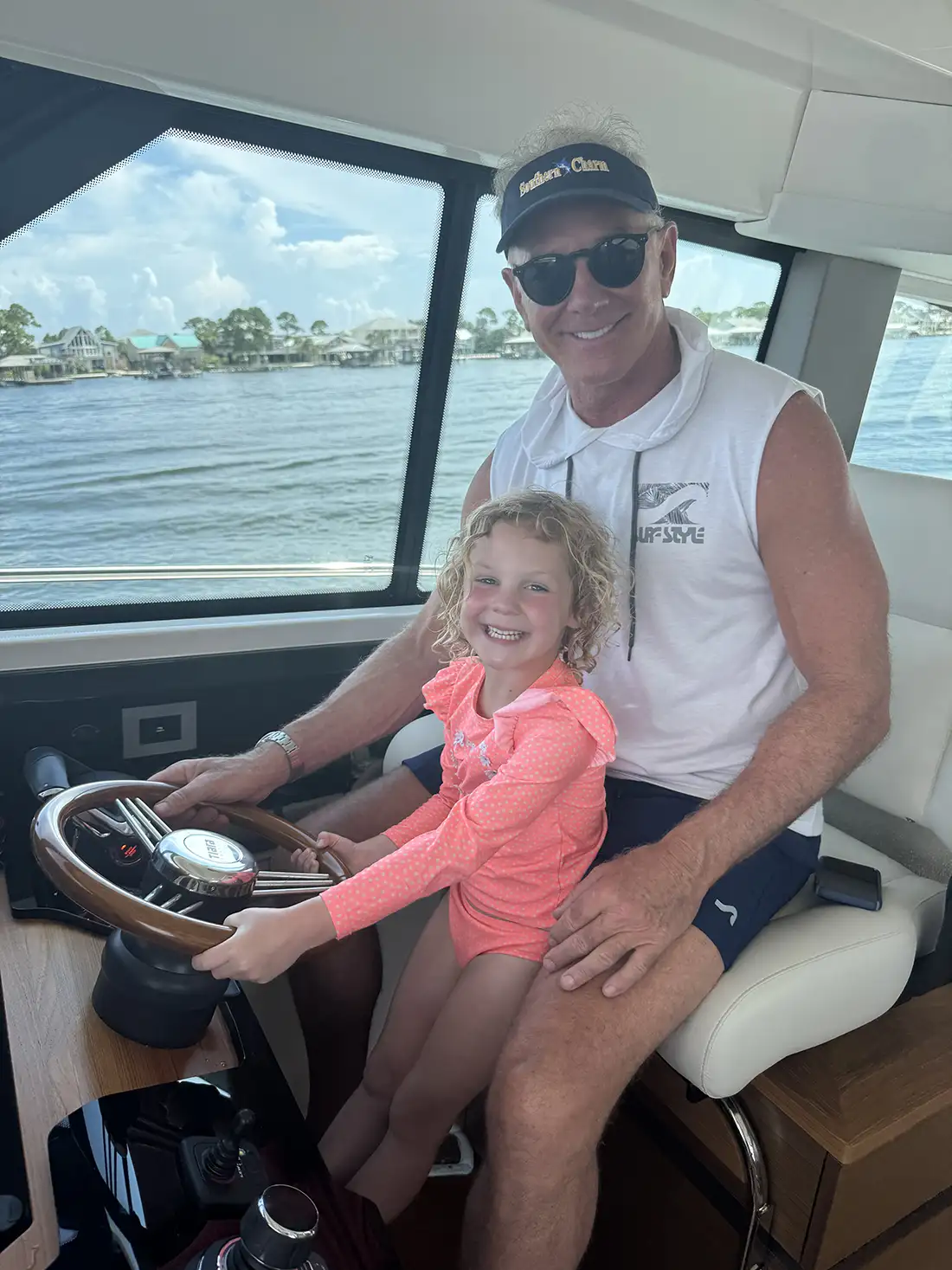
Home base is Orange Beach, Alabama, where Davis and his wife Lisa keep their boats and spend much of the year.
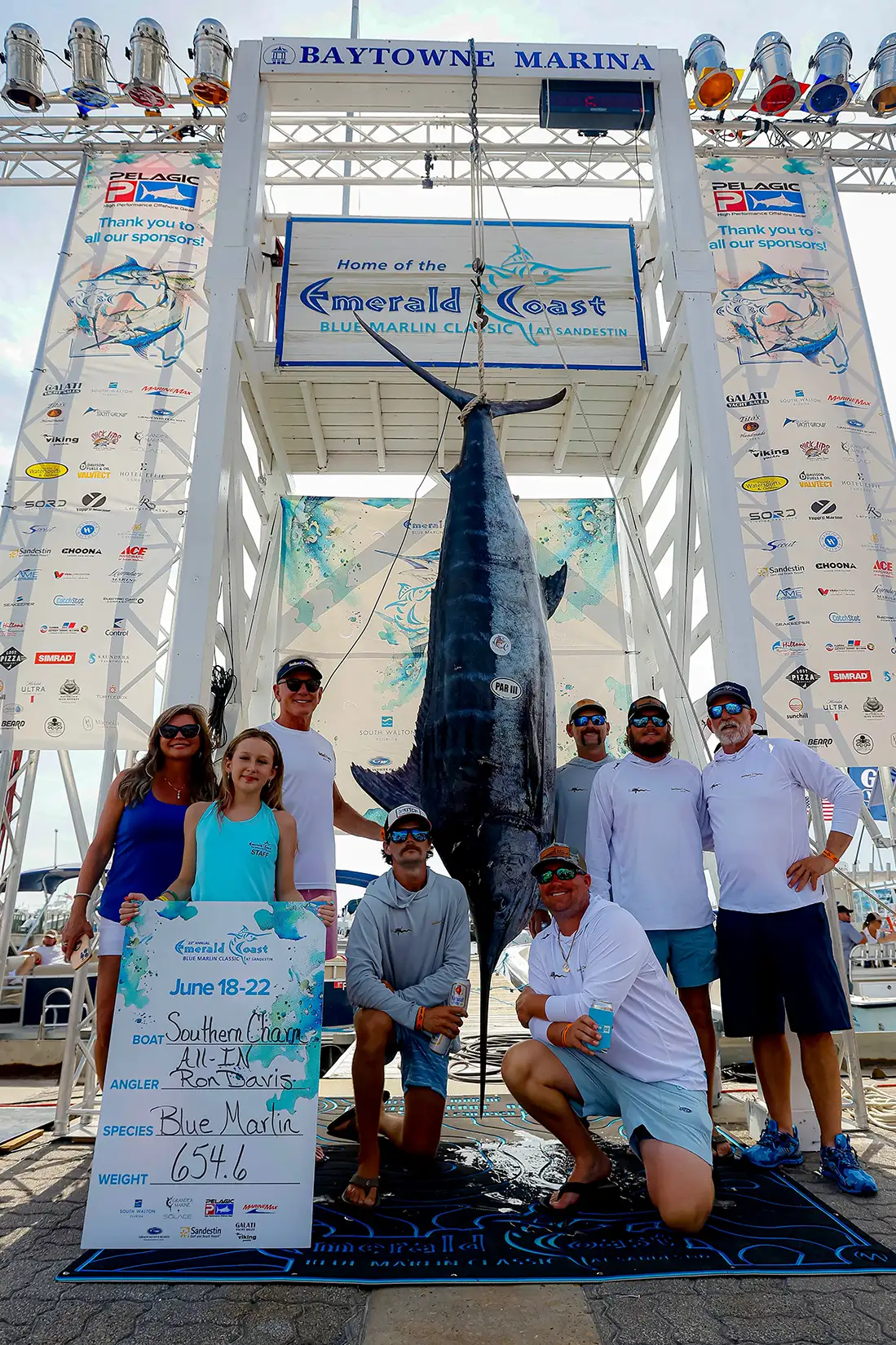
Davis has been boating in the Gulf for more than four decades, and blue marlin fishing has become one of his greatest passions. Eight years ago he formed a competitive tournament team called Southern Charm, which now fishes across the Gulf Coast tournament circuit.
“We fished sixteen tournaments last year,” he says with a smile.
The sport is as demanding as it is thrilling. Landing a marlin can take anywhere from thirty minutes to four hours, depending on the size and strength of the fish.
Davis fishes every tournament himself.
But for him, the experience is about more than competition. His boats often host friends, business partners, and charitable outings for veterans and disabled anglers. Some meetings that might normally happen in a boardroom instead happen offshore.
“You get to know somebody better when you’re doing something fun,” he says.